
Buy Accutane online
Home » Online Pharmacy »
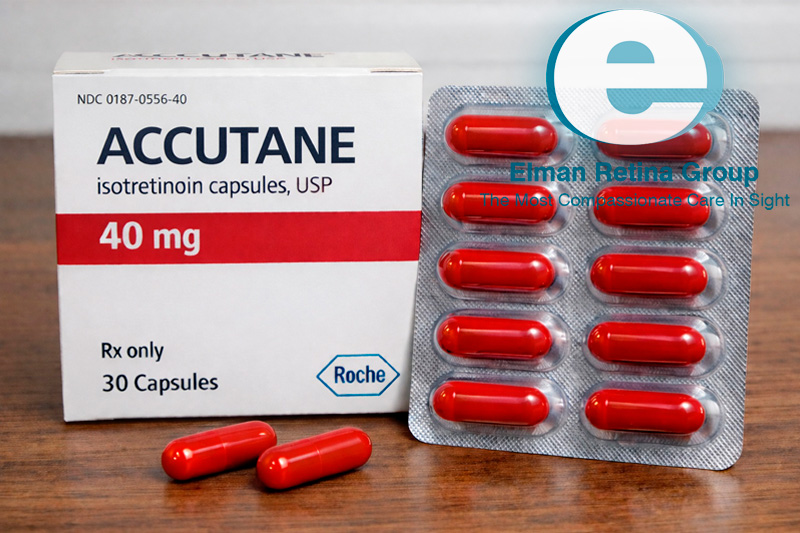
Buy Accutane online is an option to target persistent acne at its root causes and support long-term skin clearance under medical supervision. The medication works from within, not just on the skin’s surface. As treatment continues, many people notice reduced oiliness and fewer deep inflammatory lesions. It is often chosen when acne leaves marks and a more durable result is needed. With proper monitoring, therapy remains structured, predictable, and focused on achieving clear skin.
How to Buy Accutane for Acne Treatment in the USA
In the U.S., you can’t just buy Accutane online the way you’d order a regular prescription refill. Isotretinoin is a Category X medicine, so the FDA requires everyone involved — the patient, the prescriber, and the pharmacy — to use the iPLEDGE REMS program before the medication can be dispensed.
Why all the extra steps? Because Accutane can’t be used during pregnancy. It can interfere with fetal development, so the whole point of iPLEDGE is to prevent pregnancy exposure and keep treatment as safe as possible.
The usual first step is a visit with a board-certified dermatologist to confirm the diagnosis. Accutane is typically used for severe nodular acne that didn’t improve with standard treatment. Many insurance plans also want to see that you’ve already tried options like topical retinoids and oral antibiotics. After that, your dermatologist enrolls you in iPLEDGE, orders baseline labs, and sets your plan.
Where to buy Accutane over the counter? Isotretinoin is never sold OTC. In practice, it also means monthly check-ins and the required labs while you’re on treatment.
If you’d rather not do everything in person, some patients where to buy Accutane through licensed teledermatology platforms that follow iPLEDGE rules. You still complete the same safety steps — it’s just done with fewer trips to the office.
iPLEDGE: Registration and Accutane Dispensing Window
With iPLEDGE, every Accutane refill runs on a schedule. You usually have a limited time to pick up each month’s prescription. If you miss that pickup window, the prescription expires and you may need extra steps before you can continue.
Here’s the typical timeline for females of reproductive potential:
- Complete two negative pregnancy tests about 30 days apart before starting treatment.
- Choose and document two forms of contraception (as required by the program).
- Log into iPLEDGE each month and answer the required questions.
- Get a pregnancy test shortly before each refill (the program sets the exact timing).
- Pick up the prescription within the iPLEDGE pickup window for that month.
Male patients and females not of reproductive potential don’t do the pregnancy testing steps. They still need to register, complete monthly confirmations, and pick up the medication on time.
Practical tip: plan your dermatologist visit, lab work, and pharmacy pickup like one connected chain. If one part gets delayed, it can push your next refill back.
How Much Does a Full Course of Accutane Cost
If you plan to buy Accutane online in the U.S., the total cost is usually a mix of three things: the medication, your follow-ups, and lab work. A typical isotretinoin course lasts about 5–7 months, depending on your dose and how your skin responds.
The numbers below are based on current U.S. coupon/retail listings (see sources after the table). Your exact cost will still vary by dose, capsule count, pharmacy, and location.
Where these medication price ranges come from:
- GoodRx price pages for isotretinoin / Accutane, which show both retail and coupon ranges:
GoodRx isotretinoin - SingleCare coupon listings as a second reference point for discounted cash pricing:
SingleCare isotretinoin
Practical tip: if you’re paying cash, check 2–3 pharmacies with the same dose and quantity. Coupon pricing can swing a lot. If you buy Accutane online through a legitimate pharmacy, many will still accept common discount programs — but you’ll want to confirm before checkout.
How Effective Is Accutane: What Research Shows
Accutane (isotretinoin) is usually the “big gun” for acne — the option doctors save for cases that just won’t clear with the usual topicals and antibiotics. If you’re comparing results before you buy Accutane online, it helps to know why it works so well: it hits acne from several angles at once. It cuts excess oil, helps prevent clogged pores, lowers P. acnes levels, and cools down inflammation.
With standard dosing (about 0.5–1.0 mg/kg/day), research suggests sebum production can drop by roughly 90% within six weeks (Layton, 2009, Dermatologic Therapy). In plain terms: many people notice their skin gets much less oily fairly early in the course.
The longer-term numbers are also reassuring. A large 2025 cohort study in JAMA Dermatology reported that 61% of patients reached full clearance after a single course. About 39% had some relapse within 18 months, and only 8.2% needed a second course (Lai & Barbieri, JAMA Dermatol, 2025).
And if someone can’t tolerate the “classic” dose, lower-dose plans may still work. A 2024 study of 388 patients found 90.2% reached full remission on 0.2–0.4 mg/kg/day, with a 10.6% relapse rate at one year. The practical upside is fewer side effects for many patients, which can make it easier to stay on track.
Accutane vs Antibiotics and Topical Retinoids
These three options often get compared, but they’re not interchangeable. Oral antibiotics and topical retinoids can be great tools — they reduce breakouts and help keep pores clear — but they usually work only while you’re using them. Isotretinoin (Accutane) is different because it aims for a longer reset of acne activity, especially in severe or scarring cases.
Antibiotics have a built-in ceiling: dermatologists try not to keep patients on them for too long because resistance becomes a real concern, and the benefit can fade once you stop. They’re best used as a bridge — to calm an active flare while other treatments ramp up.
Topical retinoids are the long-game. They’re excellent for mild to moderate acne and for maintenance, but they usually can’t fully control deep cysts on their own. Many people still use them after isotretinoin to help keep pores clear.
Isotretinoin stands out because it’s a finite course with the best odds of long-lasting remission. It’s also the most structured option (monthly check-ins and monitoring), so it tends to be chosen when acne is severe, scarring.
Lab Tests Before and During Your Accutane Course
Labs are mainly about two things: triglycerides (lipids) and liver enzymes. Your dermatologist uses them to decide whether your dose can stay the same or needs adjustment.
Quick checklist: common tests on isotretinoin
- Lipid panel: triglycerides + cholesterol
- Liver enzymes: AST/ALT (often via CMP)
- CMP (baseline): broader metabolic snapshot
- CBC (sometimes): baseline blood counts
- Pregnancy tests (when required): per iPLEDGE schedule
Typical cadence: baseline labs, then a recheck after the first month. If results are stable, many clinicians space testing out (often every other month).
Triglycerides are the number that can move the most. Mild elevations are common. If levels climb very high (often around 500 mg/dL or more), your dermatologist may reduce the dose or pause therapy.
Alcohol is best kept minimal during the course, especially if liver enzymes are borderline.
If you buy Accutane online through a licensed provider, they usually send lab orders electronically — you still use the same lab tests and follow the same monitoring schedule.
Accutane Dosage: Weight-Based Calculation and Taking It with Food
Accutane (isotretinoin) dosing is usually based on body weight. Your dermatologist calculates a daily mg/kg dose and also keeps an eye on the total cumulative dose you reach by the end of the course. That’s why two people can take the same medication but end up with different capsule counts and schedules.
A common daily range is 0.5–1.0 mg/kg/day, and many protocols aim for a cumulative 120–150 mg/kg over the full course. For a 70 kg patient, that’s roughly 8,400–10,500 mg total.
Lower-dose approaches can still perform well for some patients. A 2024 study reported strong outcomes with 0.2–0.4 mg/kg/day, with fewer side effects in many cases
(Li et al., J Cosmet Dermatol, 2024).
Quick dosing + taking tips
- Typical daily dose: 0.5–1.0 mg/kg/day
- Common cumulative target: 120–150 mg/kg per full course
- Example (70 kg): ~8,400–10,500 mg total
- Capsule strengths: 10, 20, 25, 30, 40 mg (often combined)
- Food rule: take standard isotretinoin with a real meal that includes fat
The food part is worth taking seriously. Standard isotretinoin absorbs much better when you take it with a meal that includes fat. If you take it on an empty stomach (or with a very low-fat snack), you may get much less of the intended dose. A normal meal plus something like eggs, avocado, nuts, yogurt, or peanut butter is usually enough.
Accutane Side Effects: What’s Normal and What’s Not
Side effects are common on isotretinoin, and they don’t really change based on where you get care. If you buy Accutane online through a licensed provider or see a local dermatologist, the expected effects are basically the same — the difference is how your follow-ups are organized.
Here’s a simple way to think about side effects by how often they show up:
Most side effects are easier to handle if you focus on dryness, sun protection, and keeping things simple:
- Moisturize + lip balm: protect skin and lips every day.
- Eyes + nose: lubricating eye drops and saline spray if you feel dry.
- Sun: SPF daily, avoid sunburn.
If dryness suddenly becomes hard to control, or you develop persistent joint pain, don’t “push through” it — tell your dermatologist so they can adjust the dose or routine. And if lab values start trending up, small changes early are usually easier than waiting until they become a bigger problem.
Accutane and Depression: What the Research Says
Mood changes are listed as a possible side effect, and it’s something clinicians take seriously. At the same time, large studies don’t show a clear increase in psychiatric diagnoses across isotretinoin users overall.
For example, a 2024 meta-analysis (25 studies, ~1.6 million participants) found no increased relative risk of psychiatric disorders among isotretinoin users (Oon et al., JAMA Dermatol, 2024). Another large cohort comparison also reported no higher risk versus oral antibiotics, with some outcomes trending lower (JAAD, 2023).
The practical takeaway is balanced: most people do not develop mood problems because of isotretinoin, but individual reactions can happen. If you notice persistent low mood, withdrawal, irritability, or sleep disruption, tell your dermatologist early. It’s usually easier to adjust the plan when you catch it early.
After Accutane: Relapse Skincare and Repeat Treatment
After a full isotretinoin course, many people stay clear for a long time. Relapse can still happen. Studies often report about 10% to 39%, depending on dose and follow-up time. Don’t stop the moment your skin looks “perfect.” Many dermatologists keep treatment going a bit longer after clearance. The goal is to lock in remission. The simplest rule: finish the course exactly as prescribed.
After your last dose, your skin barrier needs time. Keep your routine simple for the first 6–8 weeks.
- Gentle cleanser + moisturizer: focus on hydration and barrier repair.
- Daily sunscreen: sun sensitivity can linger.
- Pause strong actives: skip acids and harsh exfoliation for 6–8 weeks.
- Delay aggressive procedures: waxing, lasers, deep peels, dermabrasion, tattoos — follow your dermatologist’s timing.
- Track the pattern: if deep nodules return over 6–12 months, check in early.
Some people need a second course. Many sources cite about 8% to 23%. If that happens, the same monitoring and iPLEDGE steps apply. There are also maintenance options. Some clinicians use low-dose schedules. Others use topical maintenance. The best choice depends on your relapse pattern and tolerability.

Michael J. Elman, M.D.
Michael J. Elman, M.D. has practiced ophthalmology for over 30 years, specializing in diseases of the retina and vitreous. Dr. Elman is president and founder of the Elman Retina Group, an empathetic private practice devoted exclusively to the medical and surgical treatment of the retina and vitreous with five state-of-the-art offices conveniently located throughout the Baltimore metropolitan area.
Related Pages
We’re happy to hear from you! Please be aware that this form is not monitored closely and isn’t the best way to reach us with medical questions. For timely assistance, please call the office directly, and avoid sharing medical or sensitive information here.


