
Buy Januvia Online
Home » Telehealth Pharmacy Services & Online Consultations »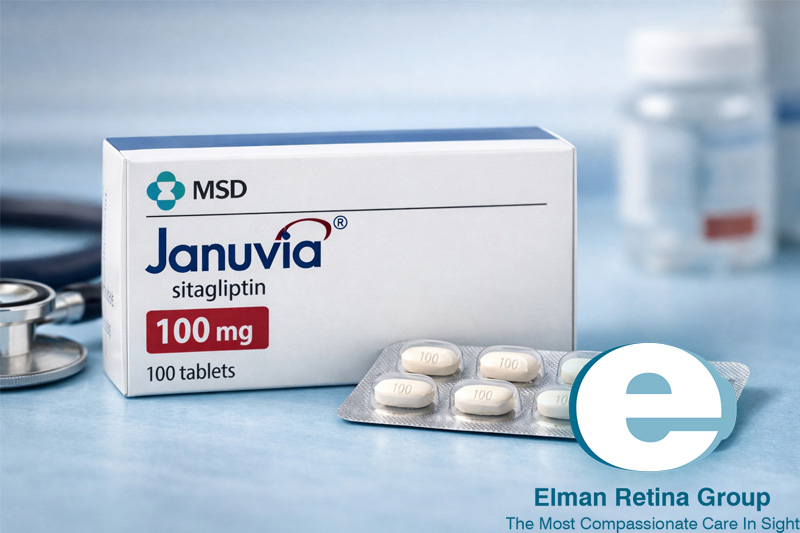
- By Dr. Liping L. Zhong M.D (Family Physician)
- Medically reviewed by Dr. Trent P. Ainsworth DO (Family Physician)
Buy Januvia online — a diabetes tablet that works with your meals, not against your body. Once daily, weight-neutral, low hypoglycemia risk. Sitagliptin has been in U.S. diabetes care since 2006 — long enough to have a solid real-world track record. It fits quietly into a daily routine: one tablet, any time of day, no food restrictions. For people who’ve dealt with crashes or unwanted weight on other medications, that kind of predictability matters. And unlike newer injectables, it asks very little of you.
What Is Januvia and Who Is It For?
Januvia is Merck’s prescription tablet for type 2 diabetes. The active ingredient is sitagliptin, which belongs to a class called DPP-4 inhibitors. The FDA first approved it in 2006, and it’s still a common option in U.S. diabetes care.

To save time and keep costs predictable, many people choose to buy Januvia online through mail-order pharmacies instead of making repeated trips to the counter. It can be convenient, but the rule stays the same: you still need a valid U.S. prescription.
Januvia is intended for adults with type 2 diabetes and is used alongside diet and exercise to help lower blood sugar and A1c. It is not approved for type 1 diabetes or for diabetic ketoacidosis.
How Januvia Lowers Blood Sugar
Many diabetes drugs can increase insulin output even when blood sugar is not especially high. Januvia works in a more regulated way by blocking the DPP-4 enzyme. DPP-4 normally breaks down two gut hormones (GLP-1 and GIP) released after meals, so when DPP-4 is inhibited, these hormones stay active longer.
As a result, insulin release is supported mainly when glucose is elevated, and the effect fades as levels move closer to normal. This glucose-dependent mechanism is a key difference from older classes like sulfonylureas, which can stimulate insulin more broadly. Because Januvia does not typically drive insulin at normal glucose levels, it rarely causes hypoglycemia on its own, which can matter for patients who have had lows on other therapy.
Why the DPP-4 Mechanism Matters in Practice
Put simply, Januvia works with your meals, not around the clock. When blood sugar rises after eating, the drug kicks in — and when levels are normal, it steps back. That’s what makes it different from older medications that push insulin release regardless of what your sugar is actually doing. In the original 24-week clinical trial, sitagliptin reduced A1c by about 0.8% compared to placebo — a modest number, but reliable and consistent across patient groups. And unlike sulfonylureas or insulin, it doesn’t cause weight gain. For many patients, that’s a meaningful difference.
Januvia, Jardiance, or Ozempic — Making the Right Choice
All three can lower blood sugar, but they’re not interchangeable. Januvia is an oral DPP-4 inhibitor that supports your body’s own insulin signaling. Jardiance is an oral SGLT-2 inhibitor that helps the body get rid of excess glucose through the kidneys. Ozempic is a GLP-1 medicine that works more directly on gut-hormone pathways, and it’s taken as a once-weekly injection.
So the choice is less about what’s “most popular” and more about what fits your situation. The 2024 ADA Standards of Care emphasize matching therapy to the person in front of you — including cardiovascular risk, kidney function, weight goals, and how well you tolerate a given option. There isn’t a single universal first-line pick anymore.
Patients Who Tend to Do Better on Januvia
-
Hypoglycemia risk is a concern — particularly in older adults or people with irregular eating habits
-
Weight is stable and weight loss is not a primary treatment goal
-
No established cardiovascular disease requiring therapies with proven CV protection
-
GLP-1 side effects such as nausea or vomiting make injectable options hard to tolerate
-
Once-daily oral tablet — no injections — is strongly preferred
When Your Doctor May Prefer Something Else
Januvia can work well, but there are cases where a doctor may start with another option. For people who already have heart disease or heart failure, medicines like Jardiance are often preferred because they have stronger evidence for protecting the heart than Januvia. When kidney disease is a big concern, SGLT-2 drugs such as Jardiance or Farxiga are also commonly chosen because they can help protect kidney function.
If weight loss is one of your goals, GLP-1 medicines usually lead to more noticeable weight changes than Januvia. And if your A1c is well above target and you need a stronger drop sooner, your clinician may pick a medication with a bigger glucose-lowering effect. At the same time, Januvia and Jardiance can be used together in some treatment plans. There is even a combination pill called Steglujan that includes sitagliptin plus ertugliflozin in one tablet.
How to buy Januvia (Sitagliptin) Online with a Prescription?
Our Family Physicians

What Januvia Actually Costs in 2026
Without insurance, brand-name Januvia is expensive. A realistic cash reference point is around $700 a month for the 100 mg strength — for example, SingleCare lists an average cash price of about $721 for 30 tablets (100 mg). That number alone makes many people pause. Still, what you actually pay can be much lower depending on coverage and which savings options you qualify for.
Before you buy Januvia online or fill it at a retail pharmacy, it’s worth comparing a few routes. The gap between a cash price and a discounted or covered price can easily reach hundreds of dollars per month.
Brand vs. Generic: Where Things Stand Now
Generic sitagliptin has received FDA approval and is now commercially available. For most patients, there is no clinical reason to pay the brand premium. If you want to buy Januvia online at a substantially lower cost, ask your pharmacist specifically for generic sitagliptin — not all pharmacies stock it by default even when it is available.
| Detail | Brand Januvia | Generic Sitagliptin |
|---|---|---|
| Active ingredient | Sitagliptin | Sitagliptin |
| Manufacturer | Merck & Co. | Multiple (Sun Pharma, Teva, others) |
| FDA equivalence | Reference standard | AB-rated — therapeutically equivalent |
| Avg. retail price (30 tabs / 100 mg) | $708 / month | $50–120 / month |
| Merck savings card eligible | Yes — $5 copay, up to $150/fill | No |
| GoodRx / discount programs | Yes — from $285/month | Yes — often lower base price |
How to Pay Less: Programs Worth Knowing
Program 01
Merck Savings Card
For commercially insured patients only. Reduces copay to as little as $5 per fill, with up to $150 savings per prescription.
As low as $5 / fill
Program 02
GoodRx & SingleCare
No insurance required. Accepted at most US chains. Compare live prices before filling.
From ~$285 / month
Program 03
Merck Patient Assistance
For low-income patients without adequate coverage. Income and US residency rules apply.
Potentially free
Program 04
Mail-Order (90-Day Supply)
Many insurers offer lower per-pill pricing on 90-day fills compared with retail monthly purchases.
Up to 30% savings
Starting Januvia: Dosing and What to Expect
The standard dose is 100 mg once daily. You can take it in the morning or evening, with or without food — the exact timing usually doesn’t change how well it works. Some people notice steadier blood sugar within the first week. A1c changes take longer, so it typically takes about 8–12 weeks of consistent use to show up clearly on lab results.
If you miss a dose, take it as soon as you remember unless the next dose is coming up soon. In that case, skip the missed one and return to your normal schedule. Don’t double the dose to make up for it. Patients who buy Januvia online through mail-order often choose 90-day supplies, which can be more convenient and lowers the chance of running out between refills.
When the Standard 100 mg Dose Gets Adjusted
Januvia is removed from the body mostly through the kidneys. So if kidney function is reduced, the usual dose may be too high and needs to be lowered. That’s why your doctor typically checks your eGFR before prescribing Januvia and rechecks it from time to time while you’re taking it.
100 mg
Standard dose — no adjustment needed
50 mg
Moderate CKD — reduced dose required
25 mg
Severe CKD or end-stage renal disease
No dose adjustment is needed based on age alone. However, kidney function tends to decline with age — so regular eGFR monitoring matters for older patients on Januvia.
Side Effects Most Patients Actually Experience
Januvia is generally well tolerated. In clinical trials, side effect rates were close to placebo for most common complaints. Still, side effects do occur. For the majority of users they are mild and manageable — but knowing what to watch for helps you catch anything unusual early.
The most frequently reported issue is nasopharyngitis — a stuffy or runny nose — occurring in roughly 6% of patients. Headache is also common at about 5%. Both typically resolve on their own within the first few weeks. Meanwhile, Januvia is weight-neutral. Unlike sulfonylureas or insulin, it does not cause weight gain.
| Side Effect | How Common | Severity | What to Do |
|---|---|---|---|
| Runny or stuffy nose | 6% | Mild | Usually resolves; no action needed |
| Headache | 5% | Mild | Usually resolves; no action needed |
| Upper respiratory infection | 5–6% | Mild | Monitor; consult doctor if persistent |
| Hypoglycemia (with insulin or SU) | Uncommon alone | Variable | Treat immediately; inform your doctor |
| Severe arthralgia (joint pain) | Rare | Serious | Stop Januvia; report to your doctor |
| Pancreatitis | Rare | Serious | Seek immediate medical care |
Who Should Think Twice Before Taking Januvia
Januvia is not right for everyone. Several situations exist where the risks are too high, or where a different medication is simply more appropriate from the start.
-
Type 1 diabetes.
Not approved for this condition. Without adequate insulin-producing beta cells, Januvia is not effective. -
Diabetic ketoacidosis (DKA).
Do not use Januvia if DKA is present. This requires urgent medical treatment — not an oral glucose-lowering agent. -
Known hypersensitivity to sitagliptin.
If you’ve had an allergic reaction — including anaphylaxis or angioedema — do not take Januvia. -
History of pancreatitis.
Requires individual risk–benefit assessment and careful discussion with a healthcare professional. -
Pregnancy.
Human data are limited. Insulin remains standard therapy. Inform your doctor if you are pregnant or planning pregnancy.
For older adults, no age-based dose adjustment is needed. However, kidney function tends to decline with age. Regular eGFR checks matter. In fact, Januvia’s low hypoglycemia risk makes it one of the more suitable oral options for elderly patients overall. Also, tell your prescriber about all medications — Januvia modestly increases digoxin levels, and probenecid can raise sitagliptin exposure.
Common Questions About Januvia
About The Author

Dr. Liping Zhong, MD, PhD is a board-certified Family Medicine physician providing comprehensive primary care in South Elgin, Illinois, with additional practice locations in the region. With more than 32 years of clinical experience, Dr. Zhong focuses on preventive care, long-term health management, and evidence-based treatment plans tailored to each patient’s needs.
Disclaimer
The information provided on this page is intended for general educational purposes only and does not constitute medical advice, diagnosis, or treatment. Health conditions, symptoms, and treatment responses vary significantly between individuals, and there is no universal approach suitable for every patient.
Medical decisions should only be made in consultation with a licensed healthcare professional who can evaluate your medical history, current medications, underlying conditions, and individual risk factors. Information on this page should not be used to determine treatment plans, medication selection, dosage, or to assess potential drug interactions.
This content is not a substitute for professional medical care. Before starting, modifying, or discontinuing any medication or therapy, you should seek guidance from a qualified physician, pharmacist, or other licensed clinician who can provide personalized medical advice based on a proper clinical assessment.
If you have questions or concerns regarding your health, treatment options, or medications, always consult a licensed medical professional.
Related Pages
We’re happy to hear from you! Please be aware that this form is not monitored closely and isn’t the best way to reach us with medical questions. For timely assistance, please call the office directly, and avoid sharing medical or sensitive information here.


